24 hr
Chittorgarh Fort Private Day Trip from Udaipur
- Private experience
- Personal attention
- Premium amenities
- Free cancellation
Chittorgarh Fort Tickets — Reserved Entry & Guided Walks
Seven gates climb the ridge, and seven centuries answer back.
Compare fares, pick the fit — all bookings are mobile-voucher and eligible for free cancellation where shown.
24 hr
8 hr
10 hr
| Experience | From | Duration | Rating | Transfers | Pickup | Free cancel. | Price | |
|---|---|---|---|---|---|---|---|---|
|
Luxury / Private
Most popular
Chittorgarh Fort Private Day Trip from Udaipur
|
Udaipur | 24 hr | ★ 4.5 | ✓ | ✓ | ✓ | €39 | Book → |
|
Luxury / Private
Chittorgarh Fort Day Trip from Udaipur with Private Transport
|
Udaipur | 8 hr | ★ 4.4 | ✓ | ✓ | ✓ | €27 | Book → |
|
Guided Experience
Chittorgarh Fort Day Trip from Pushkar with Udaipur Drop-off
|
Pushkar | 10 hr | ★ 5.0 | ✓ | ✓ | ✓ | €36 | Book → |
Worth it for history-minded travellers, not casual stops
At 600 INR for a foreign adult, Chittorgarh Fort Tickets buy access to a UNESCO-listed hill fort holding 65-plus surviving structures across roughly 700 acres — Vijay Stambh, Kirti Stambh, Rana Kumbha Palace, Padmini Palace, Gaumukh reservoir and a scatter of Jain and Hindu temples, all under one ASI entry fee. Measured per monument, that works out to under 10 INR a structure, which undercuts almost every comparable Rajasthan landmark. The catch is that this is a self-guided ruin, not a curated museum: interpretation on-site is thin, so the fee pays off most for people who arrive with reading done or hire a local guide. Chittorgarh Fort Tickets tours suit anyone drawn to Rajput history, epic architecture or quiet ruins over polished attractions. Travellers wanting a quick photo stop between Udaipur and Bundi will find the value harder to justify against the drive and the summer heat.
Bottom line: For anyone who cares about Rajput history and landmark architecture, a Chittorgarh Fort Tickets tour repays the 600 INR several times over — for a passing photo stop, it does not.
Hand-picked experiences loved by thousands of travelers
1 day
Free Cancellation
One-way private transfer from Udaipur to Pushkar with a full stop to explore Chittorgarh Fort.
1 day
Free Cancellation
A full-day guided journey to India's largest fort, with heritage lunch and private AC transport included.
10 hours
Free Cancellation
A private day trip from Udaipur to the UNESCO-listed Chittorgarh Fort and Meera Bai Temple.
12 hours
Free Cancellation
Full-day private tour from Udaipur to Jaipur, tracing Rajasthan's fort legends and Pushkar's sacred lake.
10 hours
Free Cancellation
Private one-way transfer from Udaipur to Jaipur with a self-guided stop at historic Chittorgarh Fort.
8 hours
Free Cancellation
Full-day guided journey to India's largest fort, with Rajasthani lunch and hotel transfers included.
12 hours
Free Cancellation
Full-day journey from Pushkar to the UNESCO-listed Chittorgarh Fort, with round-trip transfers included.
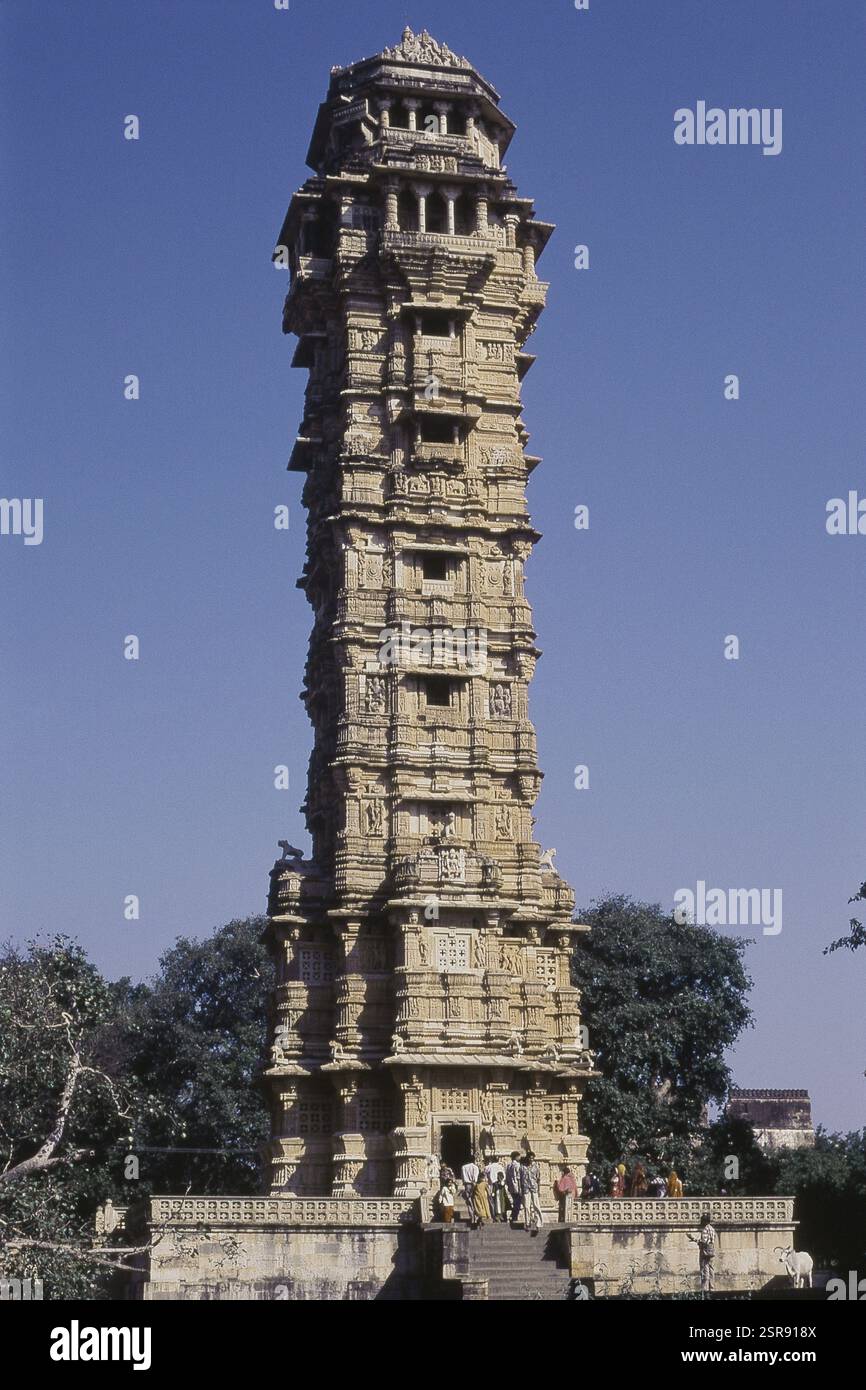
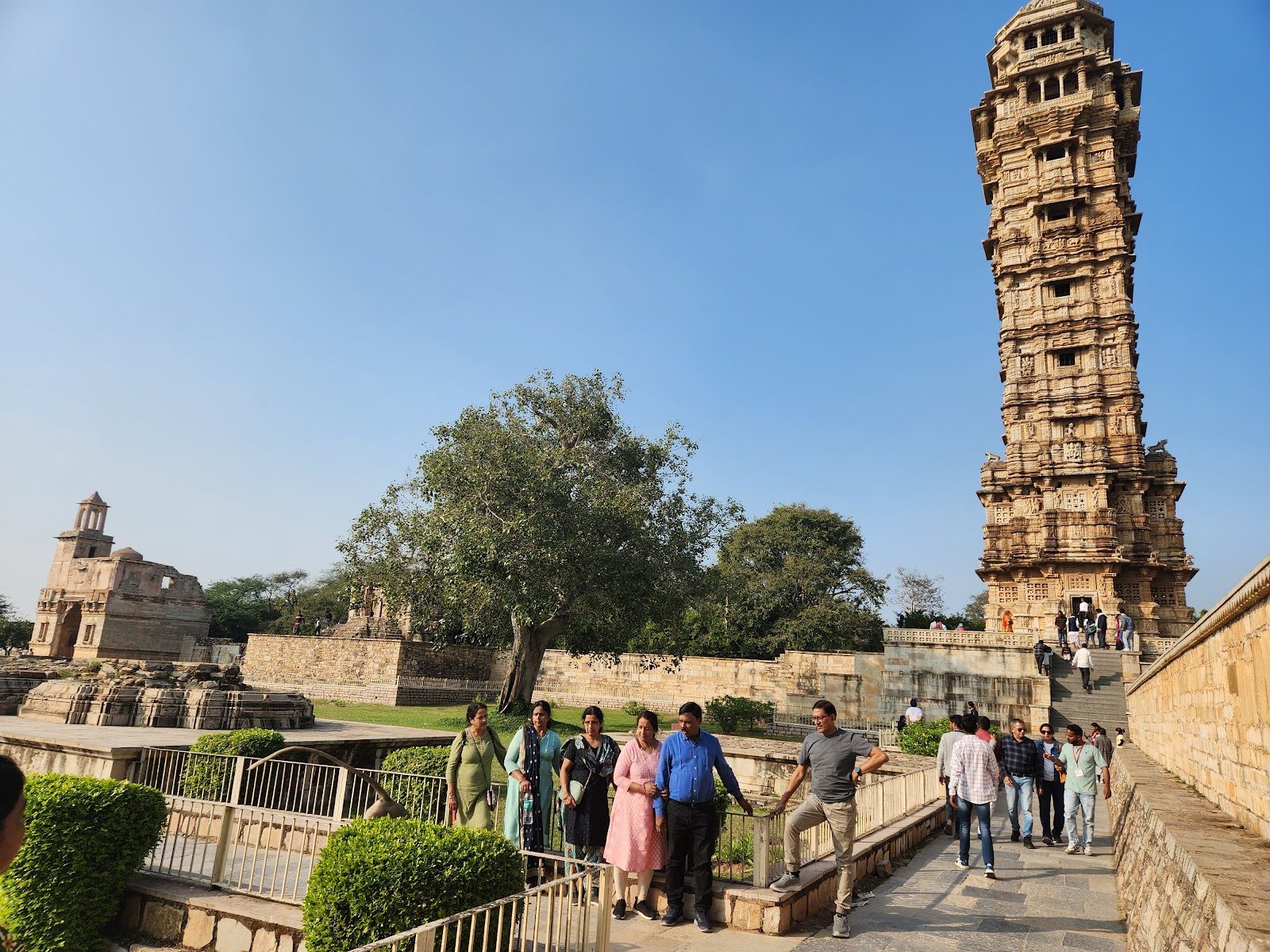
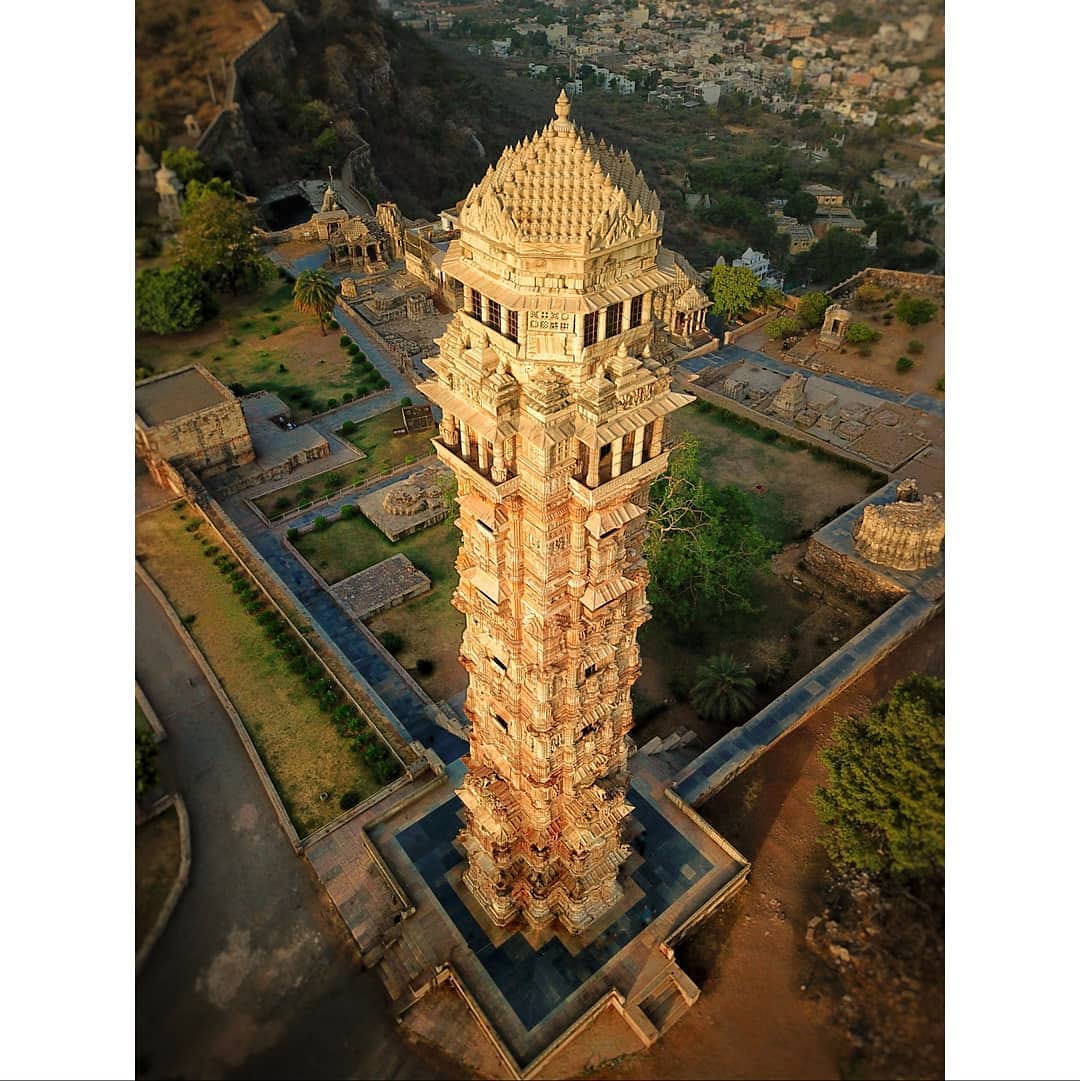
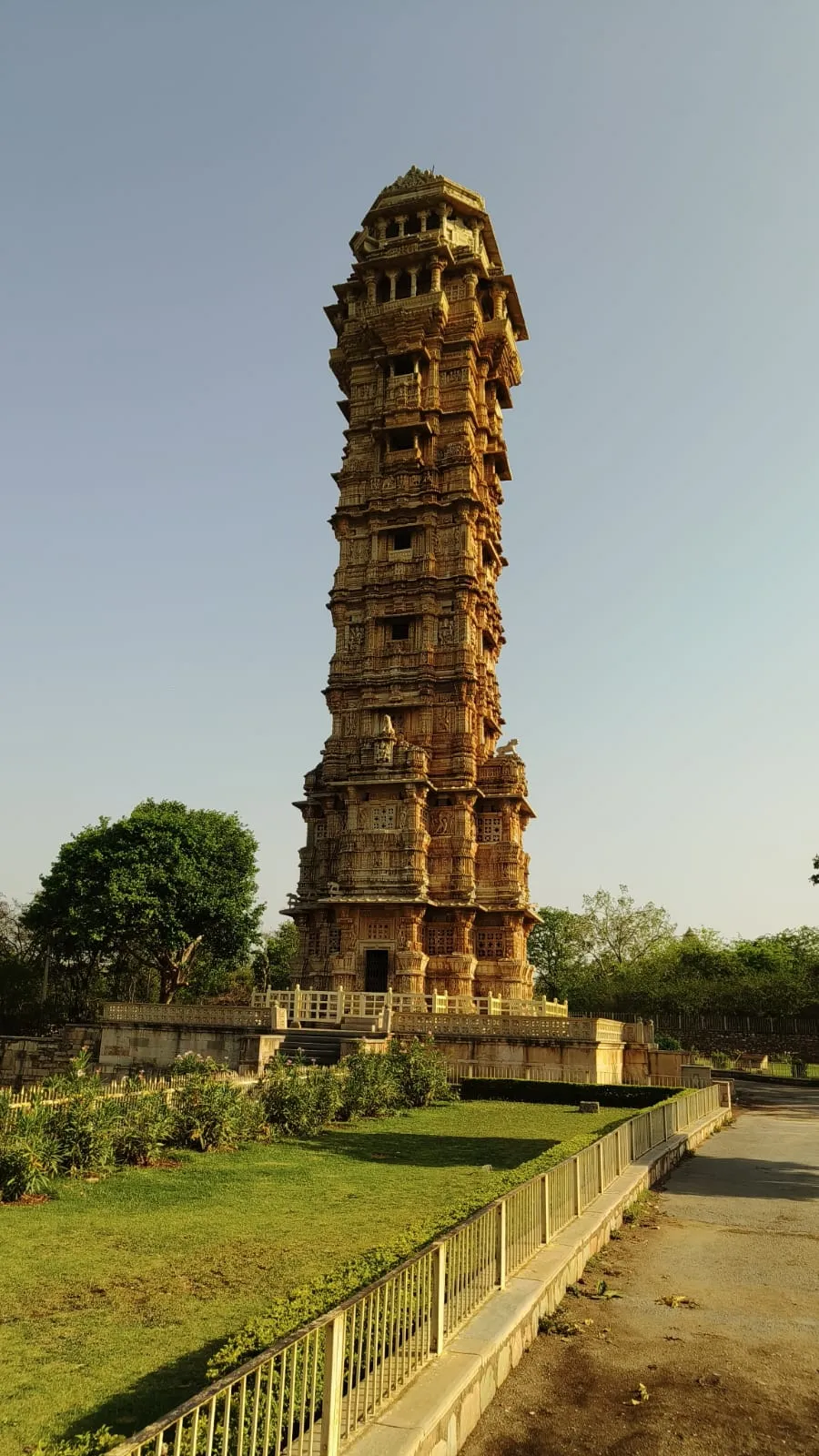
A 37-metre, nine-storey victory tower built by Rana Kumbha in 1448 after his win over Mahmud Khilji, reachable via a narrow interior spiral staircase with carved panels of Hindu deities on every level.
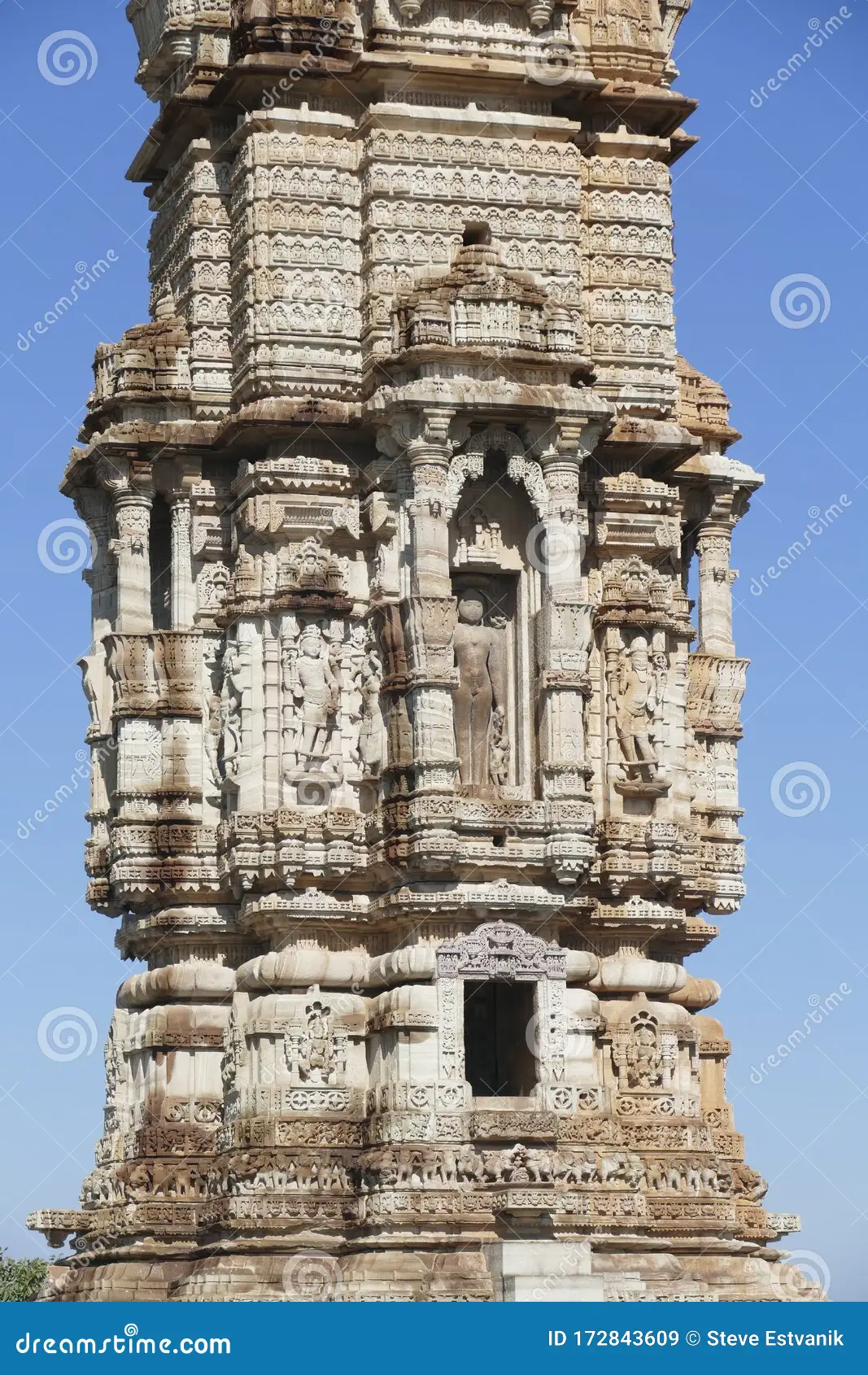
A 22-metre Jain tower dating to the 12th century, dedicated to the first Tirthankara Adinath and reached by 54 narrow steps to a six-storey summit with a later-added pavilion.
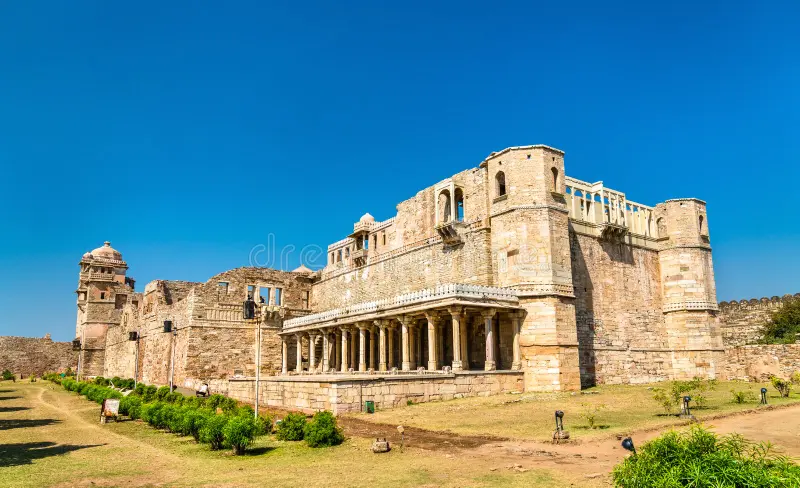
The fort's oldest surviving palace, believed to be the birthplace of Maharana Udai Singh and the site of the 1303 jauhar, its ruins still show underground chambers and a stable block.
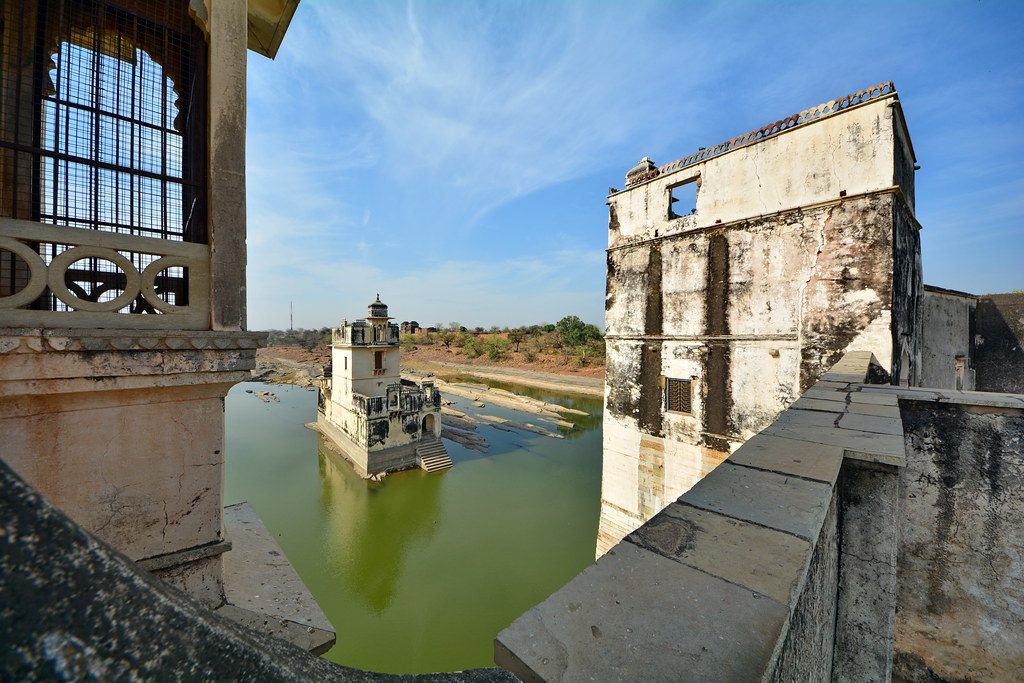
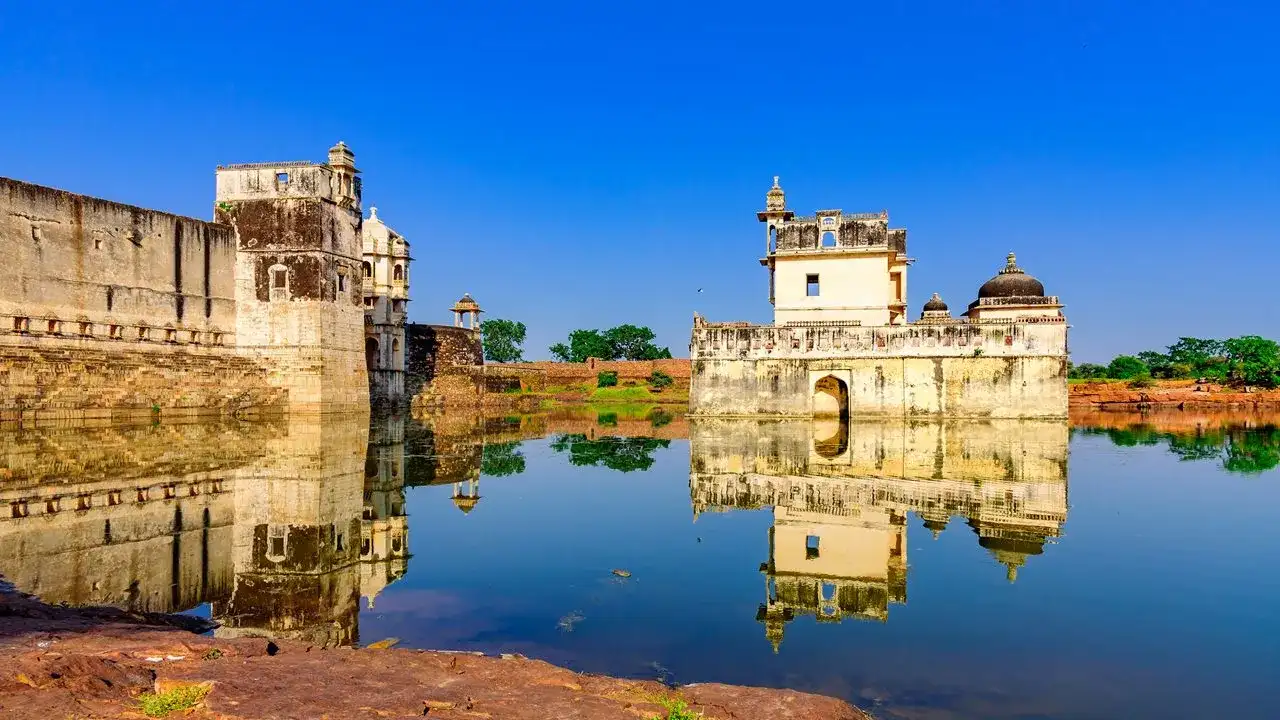
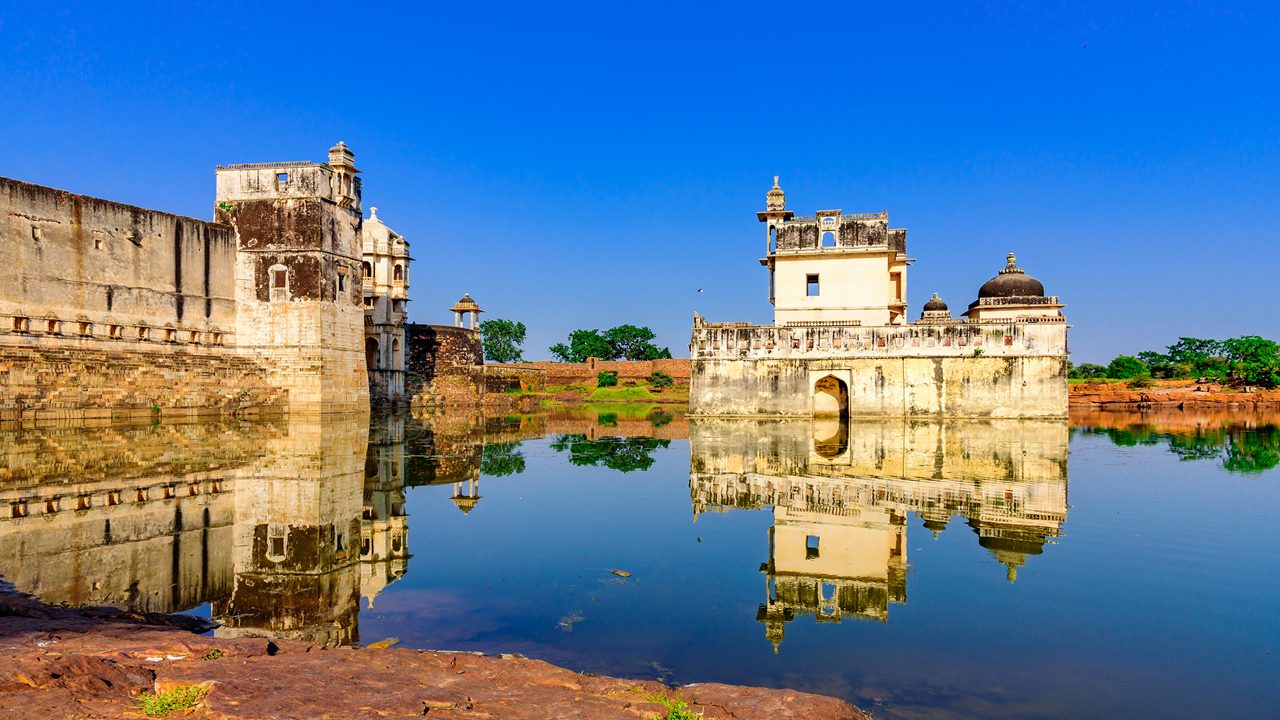
A three-storied, moat-surrounded white palace in the fort's southern section, built around a reflective water pool tied to the legend of Alauddin Khilji's siege.
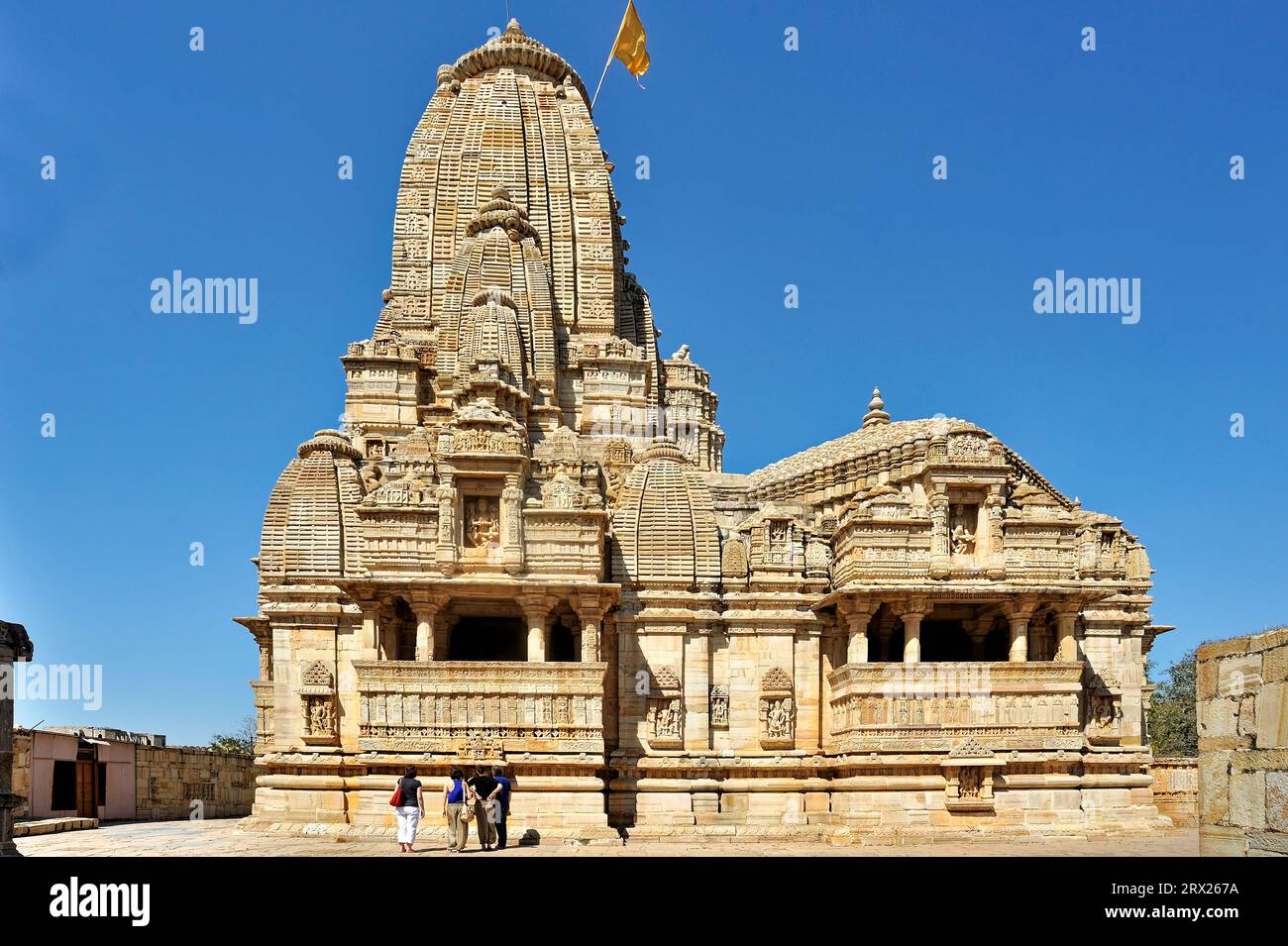
A pyramid-shaped 15th-century temple built by Rana Kumbha in Indo-Aryan style, its carved panels depicting scenes of 15th-century Mewar court life.
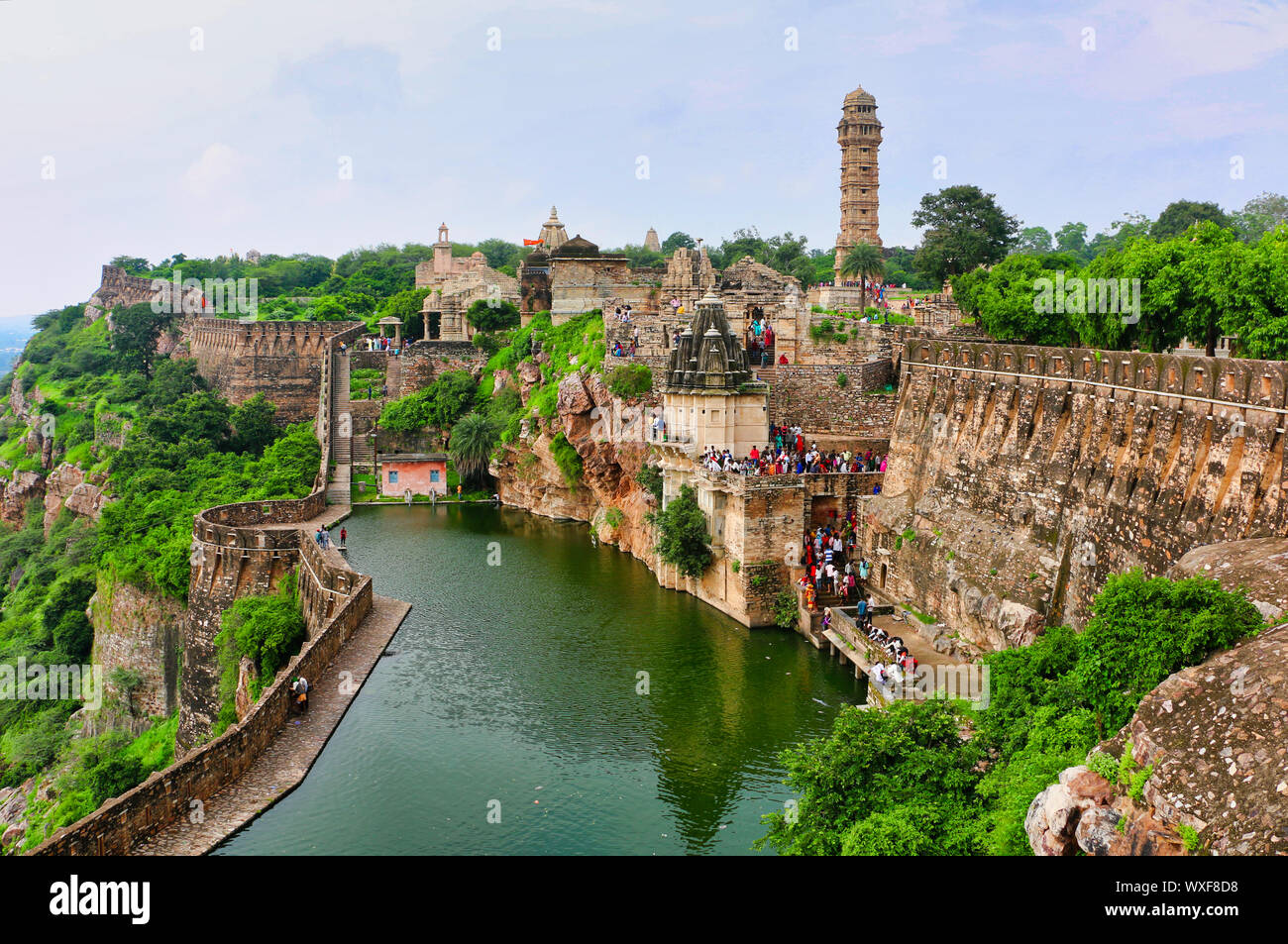
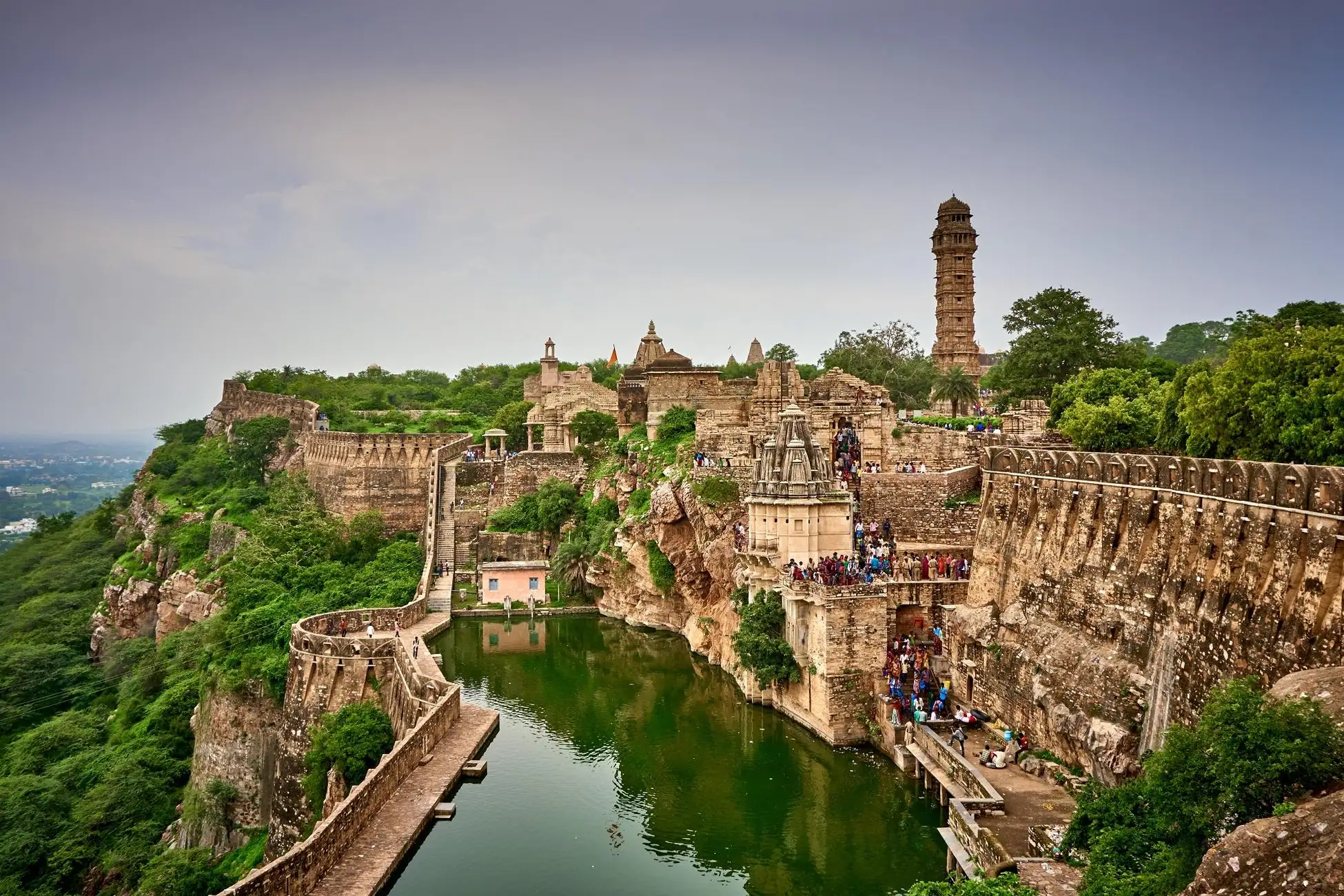
A spring-fed water tank named for a cow-mouth-shaped rock spout, historically one of the fort's key water sources across its 700-acre hilltop.
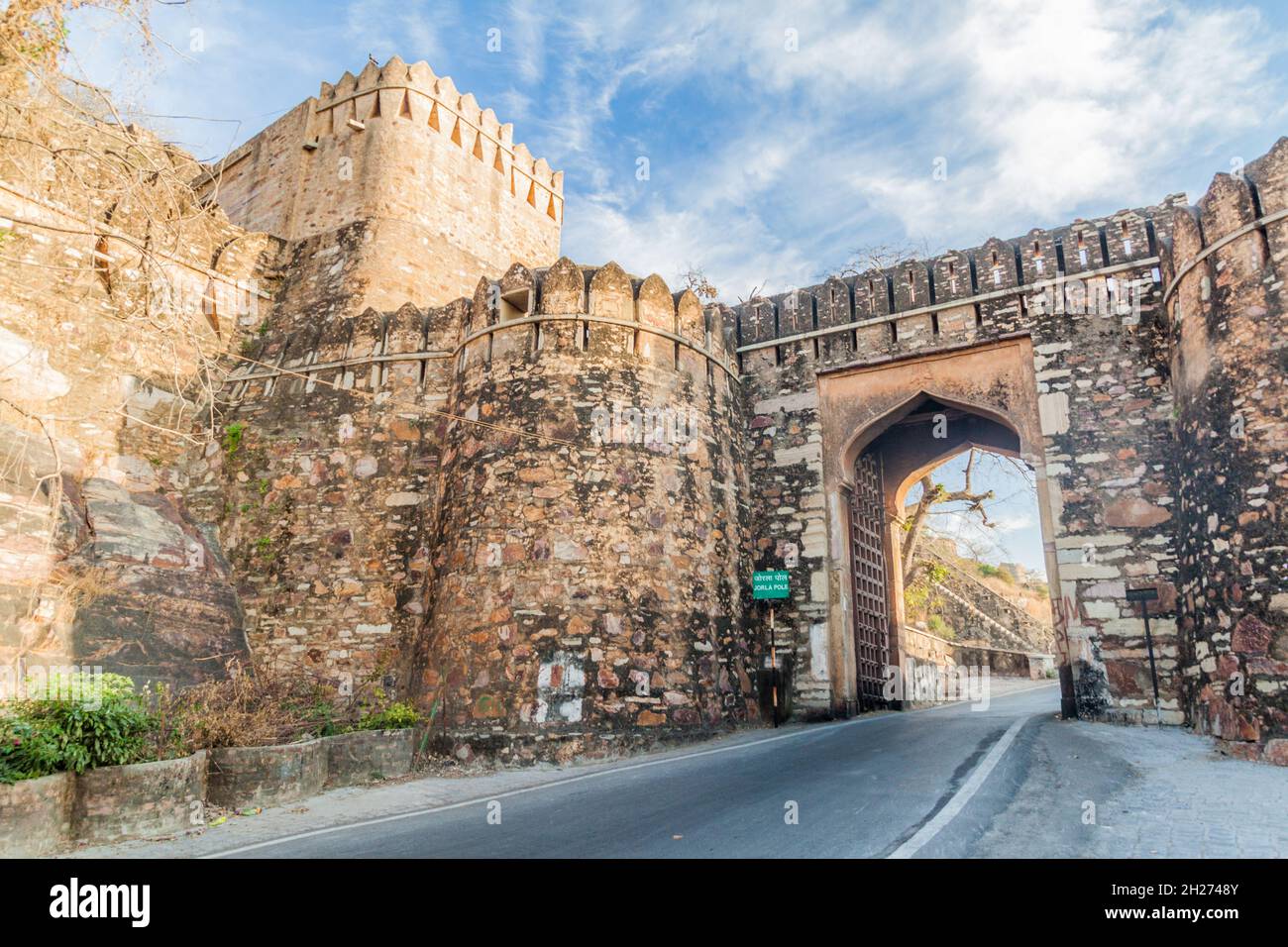
You reach the base of the ramp on Fort Road and begin the climb through seven gates. Padal Pol comes first, then Bhairon Pol, Hanuman Pol, Ganesh Pol, Jorla Pol, Laxman Pol, and finally Suraj Pol, where the plateau opens out. The ascent runs about 1.5 kilometres.
Vehicles are permitted, and most visitors ride up rather than walk.
At the top you turn toward Rana Kumbha's Palace, the oldest standing structure. You step down into the underground chambers, where the temperature drops noticeably. From there the road bends to the Vijay Stambh. You climb its internal stair — 157 steps, narrow, turning tight against the sandstone — and emerge onto the upper gallery looking north across the whole plateau. The carved deities on the exterior faces are best read from ground level afterward.
You continue past the Meera Temple and Kumbha Shyam Temple, both compact and open-sided. The Kirti Stambh stands further along in the Jain quarter, quieter and rarely crowded. You pause at Gaumukh Kund, where spring water still runs through the stone spout into the reservoir below, and at Padmini's Palace, where the water pavilion sits detached from the shore.
Your Chittorgarh Fort Tickets cover the ASI-ticketed enclosures across the site. The best arrival window is 09:45–12:00, when temperatures are cooler and crowds thinner before midday heat. Gates open at 09:45 and close at 18:30 daily.
All the details about your upcoming adventure in one place
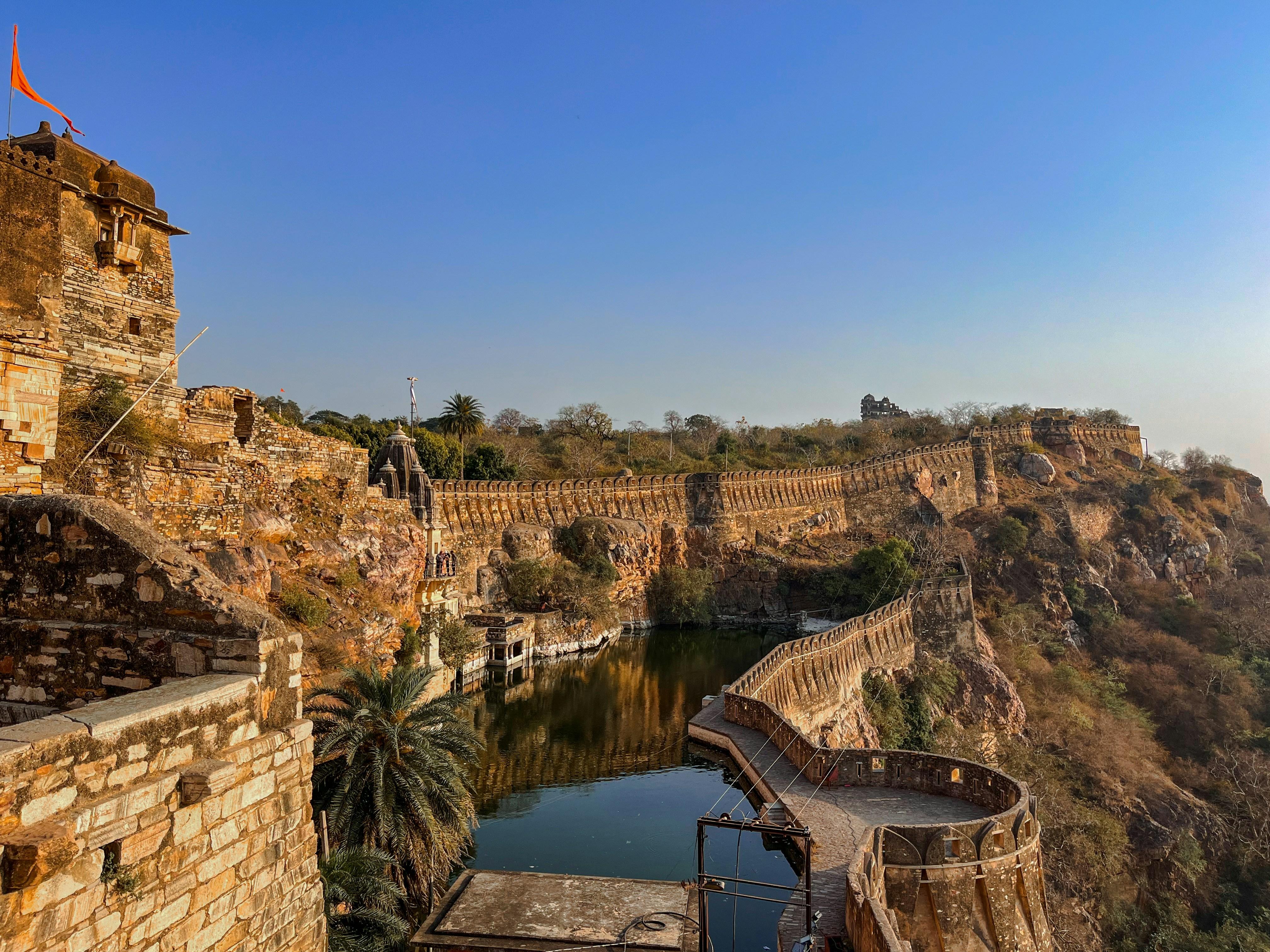
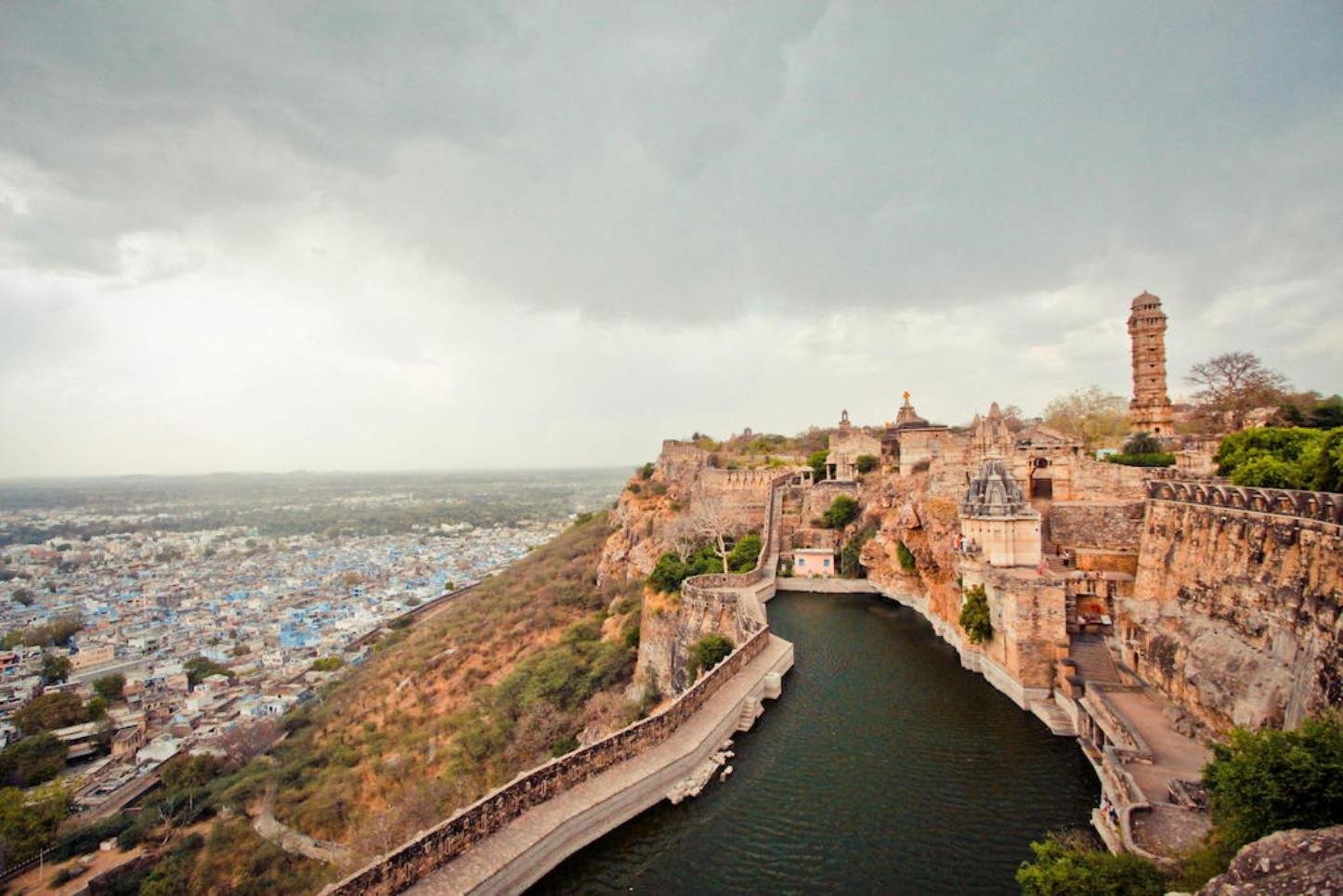
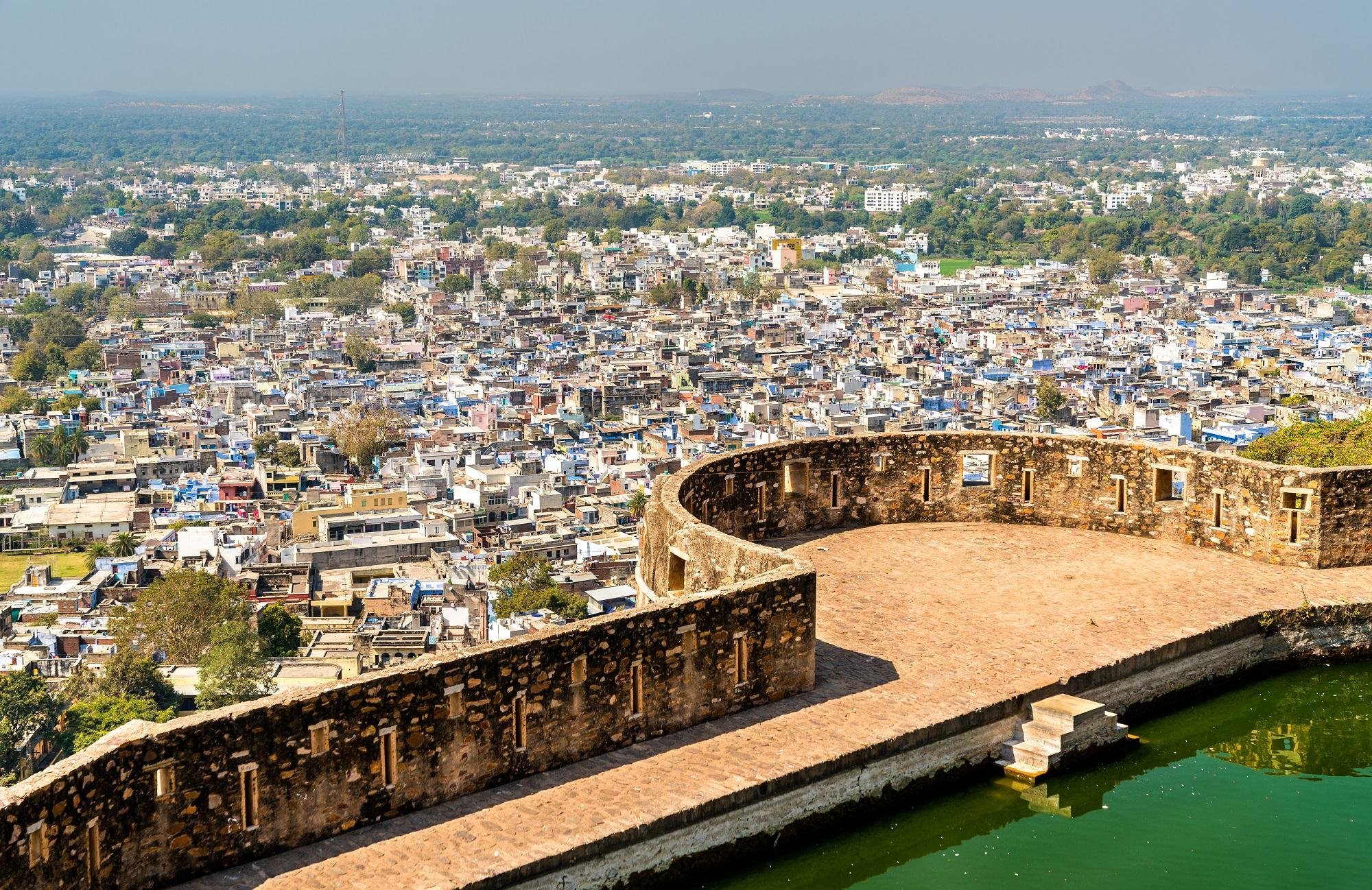
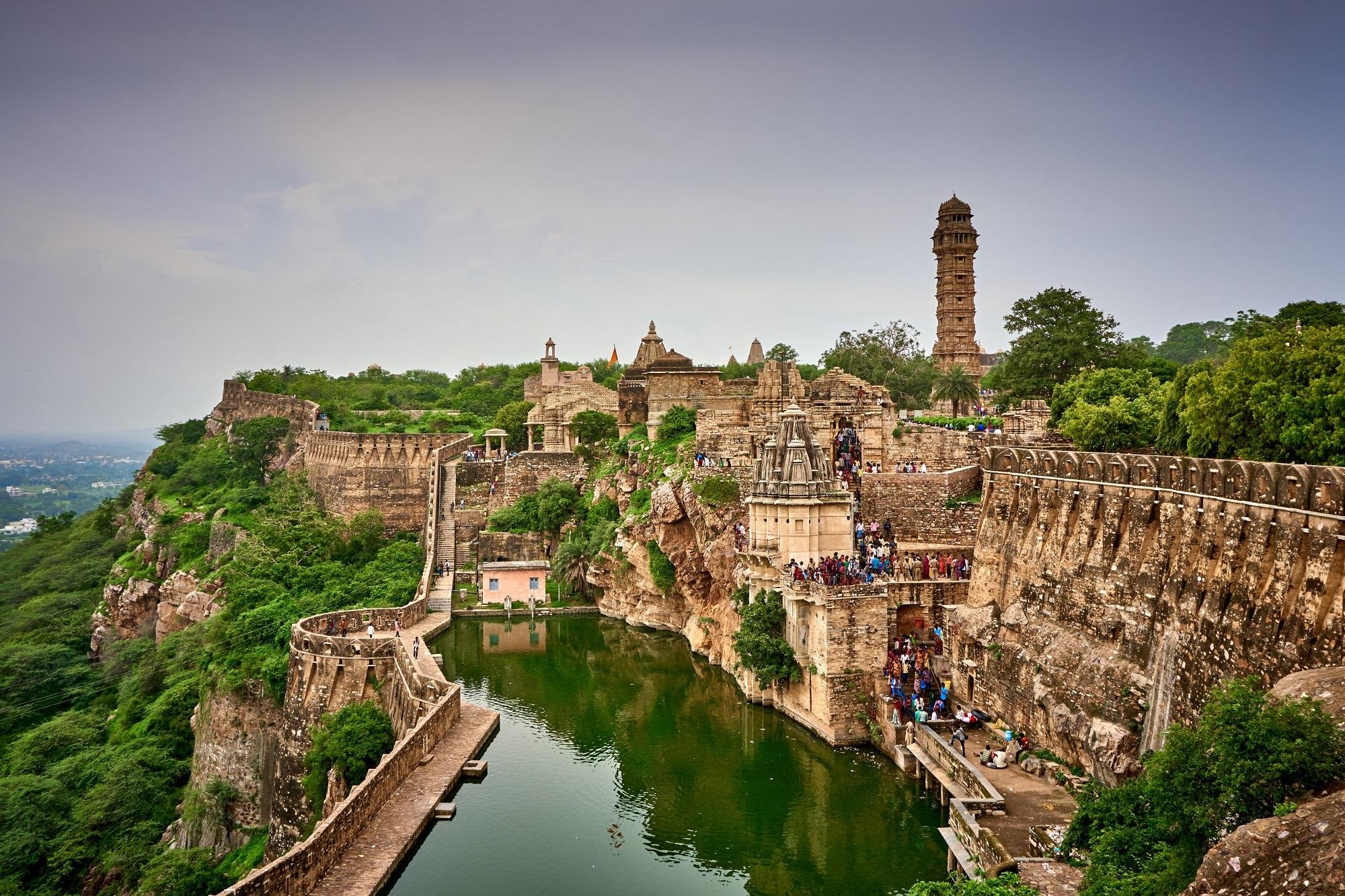
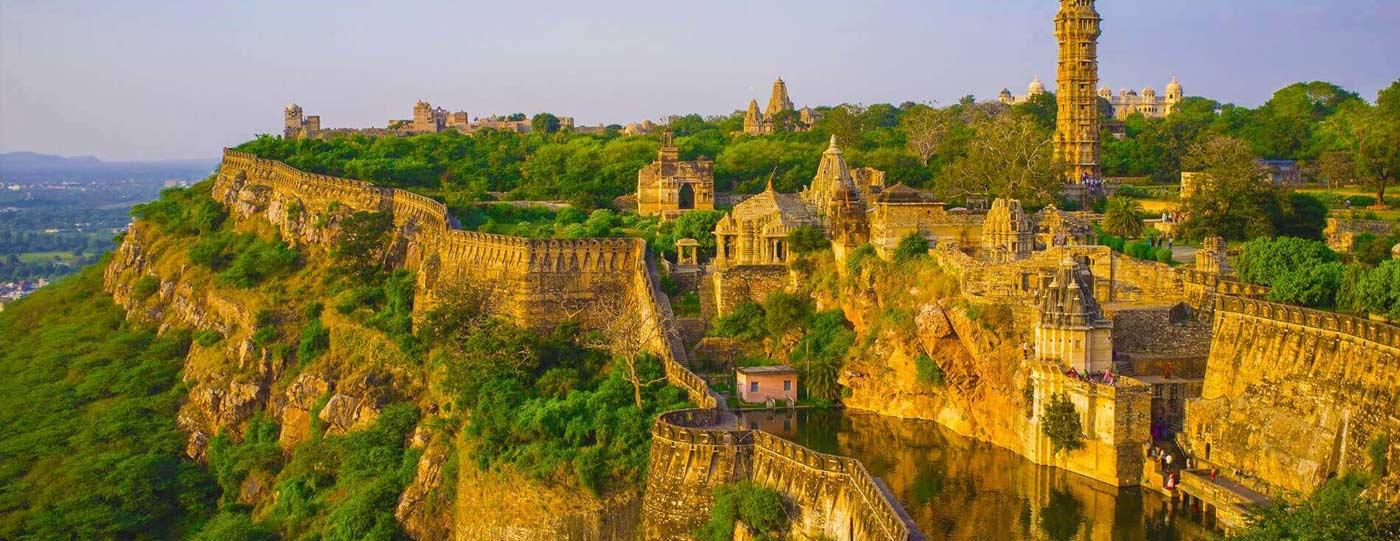
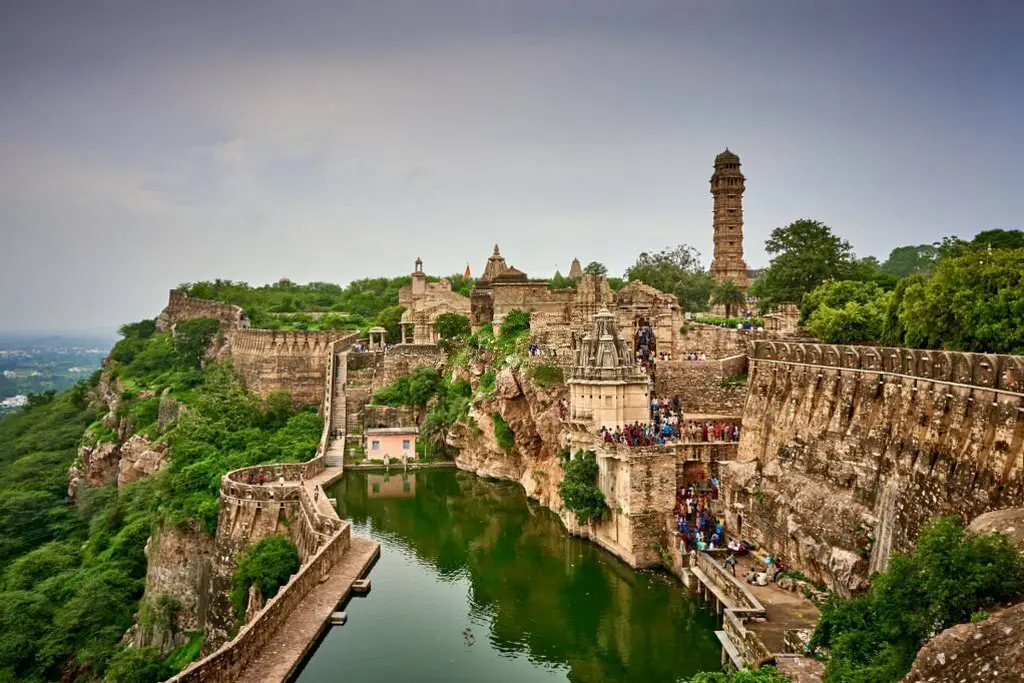
Spread across roughly 700 acres on a rocky plateau above the Berach river, this UNESCO World Heritage site holds the Vijay Stambh, Kirti Stambh, Rana Kumbha Palace, Padmini Palace and the Gaumukh reservoir within a single walled complex. Chittorgarh Fort Tickets tours pair guided commentary with entry to the main monument cluster along the seven-gate ascent road. Guides explain Mewar architecture and Rajput symbolism as you move between temples, stepwells and the surviving ramparts.
The fort covers roughly 280 hectares on a single plateau — a walled town rather than a citadel, and for centuries a functioning capital with reservoirs, temples, granaries and streets. That scale is the first thing visitors misjudge.
Chittorgarh Fort Tickets are sold at a site that stretches nearly six kilometres end to end, ringed by thirteen kilometres of curtain wall.
The Mewar rulers held this plateau from the eighth century until 1568, when the capital shifted to Udaipur. Three sieges — 1303, 1535, 1568 — punctuate that span and gave the fort its place in Rajput memory. The dedicated history section on this page treats those campaigns properly; what matters for the visiting eye is what survived them. Roughly a fifth of the original structures stand today, and the ruins are legible rather than reconstructed.
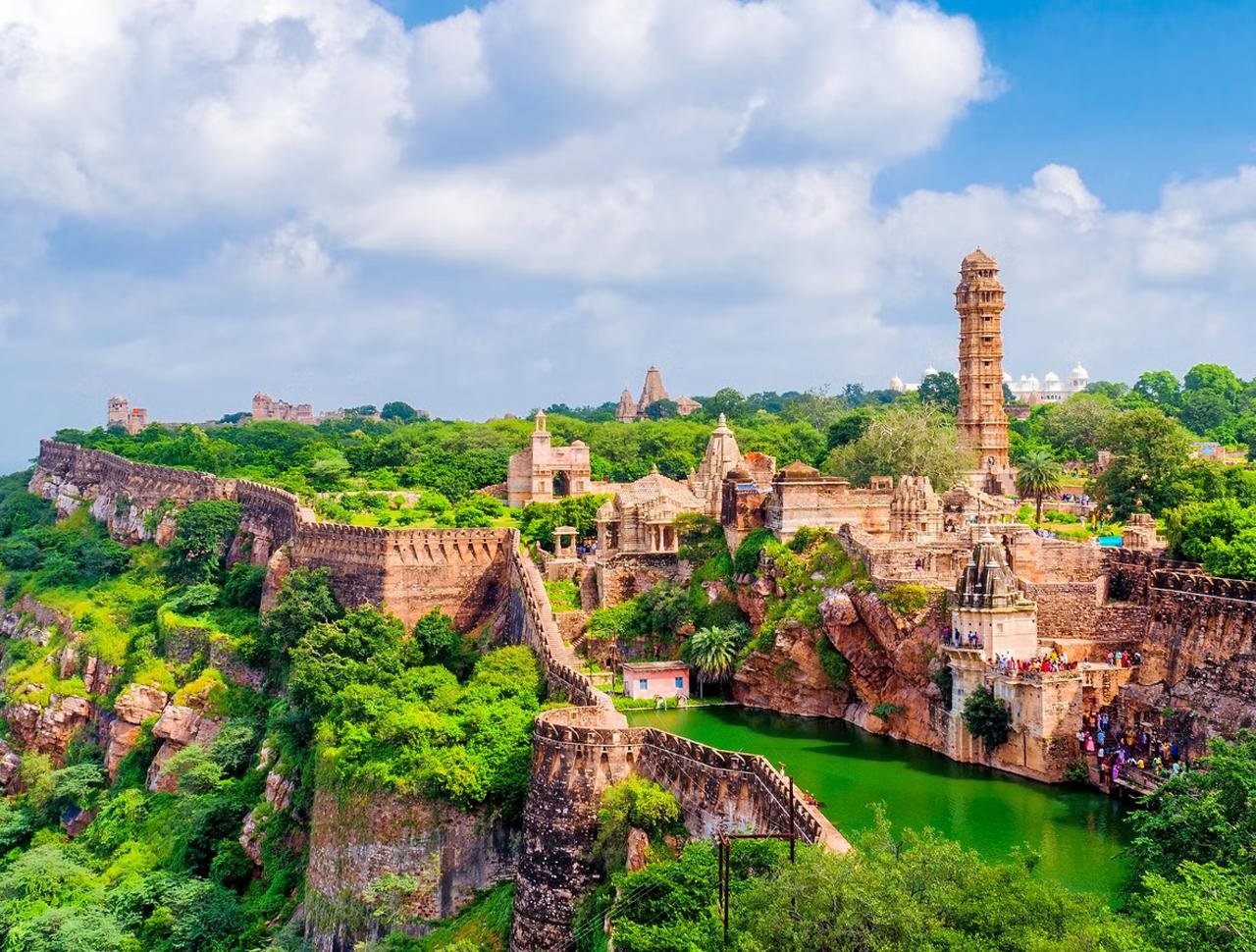
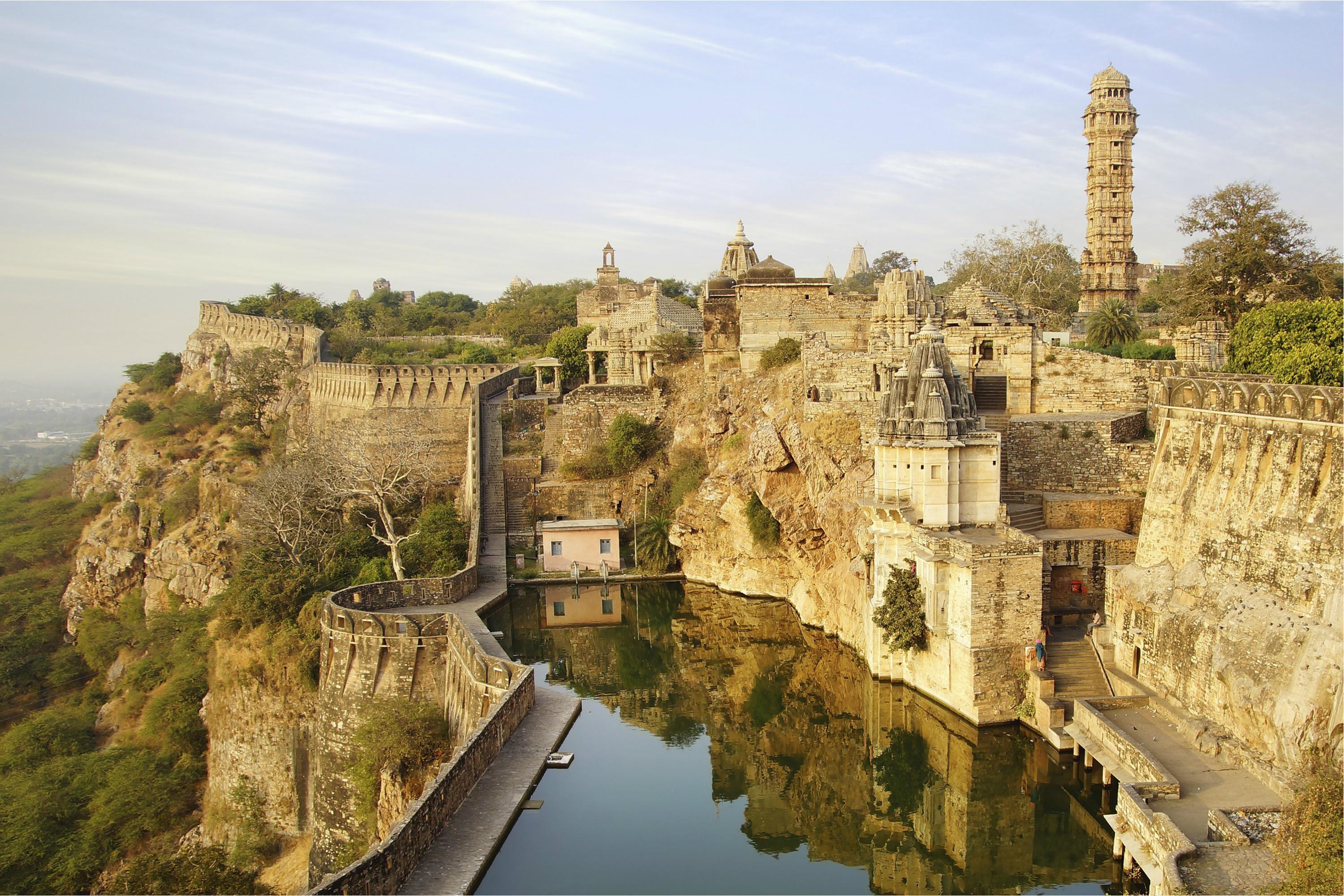
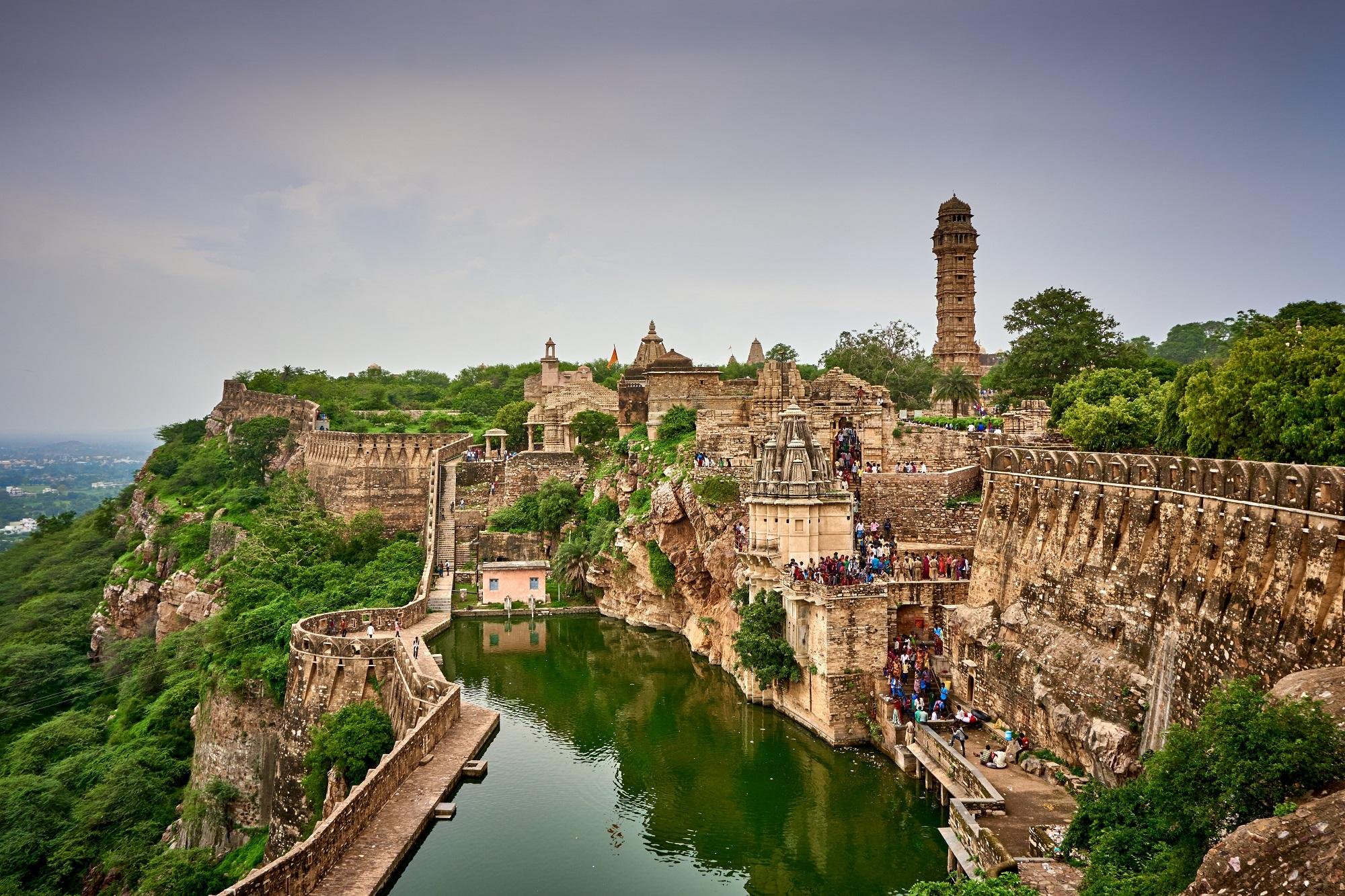
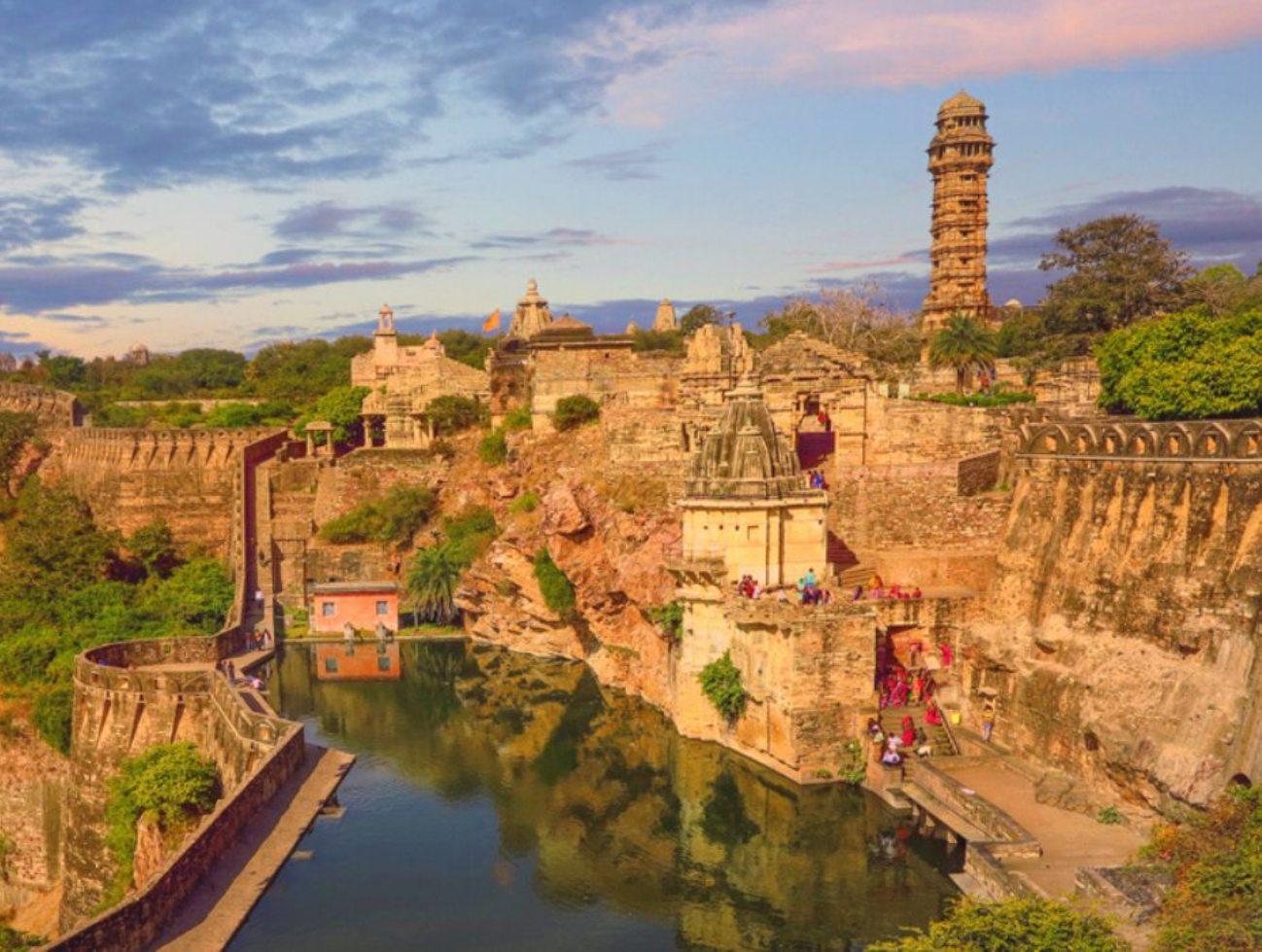
Architecturally, the plateau reads as a compressed anthology of Rajput and Jain building from the ninth to sixteenth centuries. The Vijay Stambh, raised by Rana Kumbha after 1440, rises nine storeys and 37 metres, its sandstone faces carved with Hindu deities and a narrow internal stair of 157 steps. The older Kirti Stambh, a twelfth-century Jain tower of 22 metres, honours Adinath and carries a denser, quieter iconography. Between them sit the Kumbha Shyam Temple, the Meera Temple associated with the poet-saint Mira Bai, and the Kalika Mata Temple, an eighth-century sun shrine later reconsecrated. Rana Kumbha's Palace — the oldest surviving structure, entered through the Suraj Pol — retains its stables, elephant enclosures and stepped underground chambers. Padmini's Palace sits beside a water pavilion, and Gaumukh Kund, fed by a spring through a carved cow's mouth, still holds water.
UNESCO inscribed the site in 2013 as part of the Hill Forts of Rajasthan, a serial listing of six fortresses that together document Rajput military architecture between the eighth and eighteenth centuries. The Archaeological Survey of India administers the monument, and the ASI entry fee of 600 INR (foreign adult, per person) covers the ticketed enclosures. Conservation here is deliberately restrained: masonry is stabilised, not restored, so the sandstone retains its weathering and the tower carvings their erosion.
What distinguishes the plateau from Rajasthan's other landmarks is continuity of use. Villages still occupy parts of the fort. Pilgrims still climb to the Kalika Mata shrine. Cattle graze near the reservoirs. Chittorgarh Fort Tickets tours therefore move through a lived settlement rather than a sealed archaeological park, and the distinction shapes everything a visitor sees between the gates.

Masonry here is stabilised, not restored — the sandstone keeps its weathering, and the towers keep their erosion.
Rajasthan's summer heat makes light, breathable cotton clothing and closed shoes the practical choice for the fort's long stone approach roads. There is no religious dress code enforced at the ASI gates, but modest covering is expected when entering the Kalika Mata Temple and Meera Temple inside the complex.
A basic security check and bag scan takes place at the main entry point on Fort Road before ticket validation. Backpacks and camera bags are permitted, but large suitcases or oversized luggage are not allowed through the checkpoint.
Personal still photography is included in the standard Chittorgarh Fort Tickets entry fee, and handheld cameras and phones are permitted throughout the palaces, towers, and temple courtyards. Tripods and commercial or drone photography require separate written permission from the ASI office in advance.
Children under 15 enter free of charge, and the wide courtyards around Rana Kumbha Palace give kids room to move without crowding. Low parapets near some towers mean adults should keep young children close.
The fort's terrain includes a long uphill approach road and uneven stone courtyards, which makes wheelchair access difficult beyond the paved zone near Vijay Stambh. Vehicles are allowed to drive between major sites inside the complex, which helps visitors with limited mobility reach individual monuments without a long walk.
Bottled water and small snacks are allowed inside the fort grounds, but eating is prohibited inside temple sanctums such as Kalika Mata Temple and Meera Temple. No outside catering or glass containers may be brought through the entry checkpoint.
;Tue
Hours
09:45–18:30 daily;location
Opening hours
09:45 – 18:30
Getting there
City-center access via metro and bus
Accessibility
Most experiences are wheelchair-friendly — check individual tours
What to bring
Comfortable shoes, water, phone for mobile voucher
Car · 2–3 hours from Udaipur · Parking fee typically under 50 INR;Public transport
Self-drive or hired car from Udaipur takes roughly 2–3 hours covering 115 km via NH48; parking is available near Fort Road at the base of the hill.
Chittorgarh Fort Tickets booked online for ASI entry (600 INR foreign adult) are e-tickets and are non-transferable and non-refundable once issued. Cancellations or date changes are not accepted after purchase, so confirm your visit date before completing checkout.
Recommended time
3-4 hours
Chittorgarh Fort Tickets cover a sprawling hilltop complex, so 3-4 hours is the realistic minimum to take in Vijay Stambh, Rana Kumbha Palace, and the main temples without rushing between sites. Add an extra hour if you're pairing your visit with the evening light and sound show, or trim toward the lower end if you're using a hired vehicle rather than walking between the spread-out monuments. Queues at the ticket counter are usually short outside of festival weekends, but the walk between clusters of monuments eats more time than people expect, since the sites sit well apart from each other across the fort's plateau. Pace yourself: cover the western monuments first, then move east as the day warms up.
Crowd levels through the day
Weather · crowds · average price — dots go green to amber to red as each metric rises.
Cool, dry weather with daytime temperatures around 20–28°C makes this the busiest season for Chittorgarh Fort Tickets, especially around winter weekends.;April to June
Booking Chittorgarh Fort Tickets through the ASI portal in advance helps skip the queue at the Ram Pol checkpoint, especially during the October–March high season.;Hire transport inside the gates
Fort Road, Chittorgarh, Rajasthan 312001
Primary ticket checkpoint and entry point for Chittorgarh Fort Tickets
Get directionsThe hill came first. A basalt outcrop rises some 180 metres above the Berach valley, and tradition attributes the earliest fortification here to the Mauryan ruler Chitrangada Mori, from whom the name Chittorgarh derives. The dating is contested. Inscriptions are thin before the eighth century, and much of the Mauryan attribution rests on later bardic sources. What is firmer is the arrival of the Guhila dynasty. Around 734 CE, Bappa Rawal is said to have taken the citadel from the Moris, founding the line that would rule Mewar from this rock for eight centuries. Visitors arriving on Chittorgarh Fort Tickets tours walk a road that climbs through seven successive gateways, each a defensive choke point layered over generations. The sieges define the fort's reputation. In 1303, Alauddin Khilji of the Delhi Sultanate invested Chittor and took it after a prolonged blockade; Rana Ratan Singh's defence collapsed, and the Padmini legend attached itself to the event in Malik Muhammad Jayasi's poem of 1540, more than two centuries later. In 1535, Sultan Bahadur Shah of Gujarat breached the walls during Rani Karnavati's regency. In 1567, Akbar besieged the fort for four months, undermining the ramparts with sabat trenches; the defenders Jaimal Rathore and Patta Sisodia died at the gates, and Akbar later placed their statues at Agra. Each defeat is remembered alongside jauhar, the mass self-immolation of Rajput women recorded in all three cases. The historicity of the numbers is disputed; the practice itself is well attested. What survives is unusually complete. Rana Kumbha, who ruled from 1433 to 1468, raised the Vijay Stambha between 1442 and 1448, a nine-storey tower of sandstone carved with Hindu deities. The older Kirti Stambha, a Jain tower dedicated to Adinatha, dates to the twelfth century. The Meera Temple, the Kalika Mata Temple, and the Gaumukh reservoir remain within a walled circuit of roughly thirteen kilometres. Maharana Udai Singh II abandoned the site after 1568 and founded Udaipur, which preserved the fort as ruin rather than palace. Chittorgarh Fort Tickets tickets are issued by the Archaeological Survey of India, which has managed the monument since Independence. In 2013, UNESCO inscribed Chittorgarh among the Hill Forts of Rajasthan, and a Chittorgarh Fort Tickets tour now traces a landscape that Mewar itself chose to leave standing.
Tradition attributes the earliest fortification on the Chittor outcrop to the Mauryan ruler Chitrangada Mori.
Bappa Rawal takes the citadel from the Moris and founds Guhila rule over Mewar from the hill.
The Jain merchant Jijaji Rathod raises the Kirti Stambha, dedicated to the first Tirthankara, Adinatha.
Alauddin Khilji besieges and captures Chittor from Rana Ratan Singh after a prolonged blockade.
Rana Kumbha builds the nine-storey Vijay Stambha in sandstone to mark his victory over Malwa.
Bahadur Shah of Gujarat breaches the fort during the regency of Rani Karnavati.
Akbar besieges Chittor for four months; Jaimal and Patta die defending the gates, and Udai Singh II founds Udaipur.
UNESCO inscribes Chittorgarh as part of the Hill Forts of Rajasthan World Heritage listing.
Climb the narrow staircase to the topmost balcony of this nine-story tower for a 360-degree sweep of the fort walls, temples, and the plains beyond. Shoot outward through the carved balcony openings rather than from the base, since the upper terrace gives the widest unobstructed frame. Space is tight, so arrive early for a clear shot before other groups reach the top.
Stand at the edge of the lotus-filled moat facing the three-story white palace for a symmetrical reflection shot, with the water doubling the facade when it is calm. This spot anchors many Chittorgarh Fort Tickets itineraries because the palace-and-pool composition is one of the fort's most photographed frames. Early light keeps the pool glassy before any breeze ripples the surface.
Photograph the Jain tower's Solanki-style carvings and tirthankara figures from the open ground level directly facing its base, since the interior stays closed to visitors. A slightly off-center angle captures the columned balconies and latticework without the shadow line cutting across the sandstone. Warm late-afternoon light brings out the carving depth best.
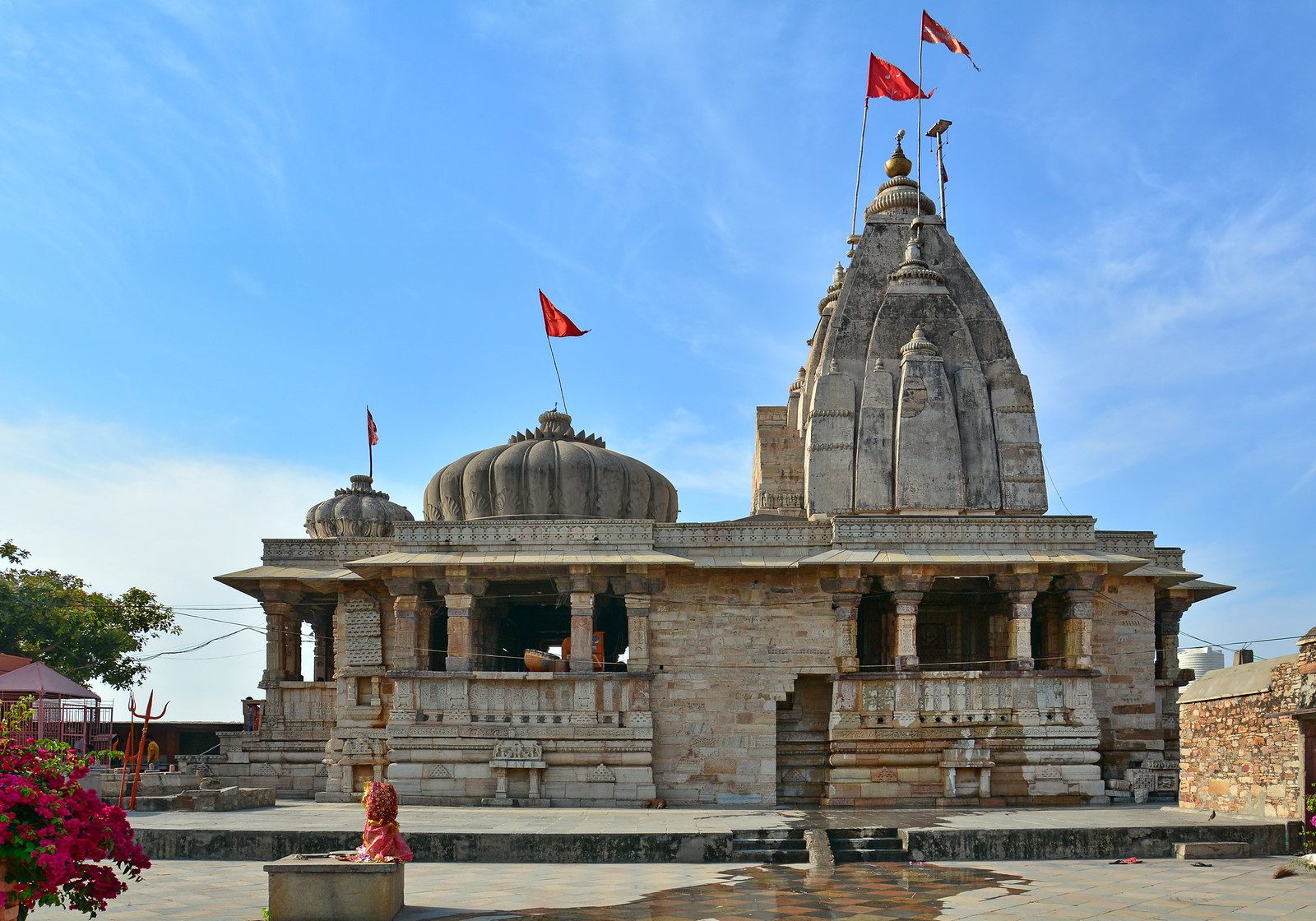
Frame the weathered stone temple against the open sky from the courtyard entrance, a quiet counterpoint to the taller towers on any Chittorgarh Fort Tickets tour. The worn carvings photograph well in soft, diffused light rather than harsh midday sun.
Use the terrace steps and archways of this later palace building for architectural lines and courtyard views, an easy add-on stop on a Chittorgarh Fort Tickets tour after the main towers. The arched doorways frame distant fort walls nicely from a few steps back.
Booking Chittorgarh Fort Tickets is only the start; the real planning challenge is a 700-acre hilltop complex with a 13-kilometer perimeter road that no child can walk in full. Families who hire a vehicle between monuments and pace their day around the heat tend to have a far smoother visit than those who try to cover it on foot.
Kids around 7 and up handle the scale and long stretches of exposed stone best; toddlers tire quickly on the uneven walkways between palaces and temples.
Hire an auto-rickshaw or small car at Badi Pol to shuttle the family between Rana Kumbha Palace, Padmini Palace, and Vijay Stambh; walking the full circuit with children isn't realistic given the distances involved.
Break the visit into two or three clusters of sights rather than attempting everything, with a shaded rest stop after each stretch; this Chittorgarh landmarks tour works best done unhurried over several hours.
The plateau has almost no tree cover, so hats, sunscreen, and water bottles for every child are essential, especially outside the cooler morning hours.
Monkeys gather around Kumbhashyam and Meera Temple; keep snacks and loose bags away from kids' hands and don't let them offer food or approach the animals.
Restrooms and small water or snack stalls exist near major sites but are limited, so plan bathroom breaks around these stops rather than relying on finding one anywhere.
There is no cafe or restaurant inside the fort walls, so pack water and light snacks for the climb and plan your meal for before or after entering via the town below.
Sits inside the fort village near Ratan Singh Palace and serves a Rajasthani thali with makke and bajra roti. Reviewers note reasonable prices but slower service at busy lunch hours, so it suits a relaxed sit-down rather than a quick stop.
Located right at the entry point, this is the practical pick before starting or after finishing your Chittorgarh Fort Tickets tour. The dal bati choorma thali is the draw, with adjustable spice levels and Punjabi and Gujarati options too.
A long-running dining hall on Fort Road known for a full thali with dal baati churma, gatte ki sabzi, and ker sangri. Good for a filling lunch after a Chittorgarh Fort Tickets tour, though it can fill up around midday.
A village-style dhaba with machaan seating, popular for daal baati and a large shared thali. Casual and fast, it works well for a quick bite rather than a lingering meal.
Serves Indian and Chinese dishes including dosas, a useful change of pace if you want something other than a Rajasthani thali near the fort landmarks.
Real experiences from real travelers
We picked up our Chittorgarh Fort Tickets at the Ram Pol counter and had the plateau nearly to ourselves by mid-morning. The scale is what gets you — the walls just keep going, kilometre after kilometre along the ridge. Wear proper shoes, the flagstones are uneven everywhere.
The narrow spiral stair inside the Tower of Victory is tight and dark, but the view over the Gambhiri plain from the top made up for it. Carvings on every one of the nine storeys, and nobody rushing you. Bring water, the stone holds heat well past sunset.
Do not underestimate the distances up on the plateau — this is not a compact site. Our Chittorgarh Fort tour guide was excellent on the Rajput architecture and the difference between Rana Kumbha Palace and the later structures. Only four stars because the signage in English is patchy in places.
Arrived just after opening and the roofless halls were full of long shadows and green parrots. Padmini Palace and its reflecting pool were quiet enough to hear the water. One of the more atmospheric Rajasthan landmarks I have visited.
Chittorgarh Fort still has villagers living inside the walls, which makes it feel alive rather than preserved. Booking Chittorgarh Fort Tickets tickets online saved a queue at the gate, though the counter line was short anyway on a weekday. The Meera Temple carvings are extraordinarily fine.
Everyone talks about the Victory Tower, but the older Jain Tower of Fame is the more delicate structure. Cool stone underfoot in the shaded colonnades, dusty and warm out in the open. Auto-rickshaw drivers wait at the gates if you do not want to walk the whole ridge.
Stood on the western wall with the whole valley below and a hard wind coming across — properly memorable. Our Chittorgarh Fort Tickets tour covered the palaces and both towers without feeling hurried. Some sections are fenced off, which is fair given the state of the masonry.
Came out from Udaipur and stayed until the light went orange on the sandstone. The seven gates on the winding approach road are a proper introduction — you climb through history before you even arrive. Fewer coaches here than at other Rajasthan forts.
Entry was straightforward and the plateau opened up immediately past the last gateway. Loved the Gaumukh reservoir tucked below the cliff edge, cool and green when everything above was baking. Guides at the entrance vary in quality, so agree on what you want covered first.
The Chittorgarh Fort tours we saw all seemed to end too early — the last hour before closing was the best light of the day. Bats coming out of the palace ruins, swifts over the temple shikhara, warm stone everywhere. Comfortable footwear is not optional here.
Everything you need to know for your journey
Chittorgarh Fort is open daily from 09:45 to 18:30, and visitors should plan to enter well before closing to comfortably cover the palaces, towers, and temples inside.
The fort has a long uphill approach and uneven stone courtyards, so full wheelchair access is limited, though hired vehicles can drive between major monuments inside the complex.
Prohibited items include outside food for temple interiors, alcohol, firearms, unpermitted drones and tripods, loudspeakers, large suitcases, and other flammable or sharp items.
Yes, personal photography with handheld cameras and phones is included with standard entry, though tripods and commercial shoots need prior ASI permission.
The cooler window between 09:45 and 12:00 offers lower temperatures and thinner crowds, and the October-to-March season overall sees the most comfortable weather for Chittorgarh Fort Tickets tours.
There's no strict dress code, but light cotton clothing suits the heat and modest covering is expected inside temples like Kalika Mata and Meera Temple.
Bottled water and small snacks are allowed on the grounds, but eating is not permitted inside temple sanctums within the fort.
Chittorgarh Fort sits on Fort Road in Chittorgarh, reachable by car from Udaipur in about 2–3 hours or by a short taxi ride from Chittorgarh Junction railway station; parking is available near the entrance.
Yes, the fort's open courtyards suit family visits, and children under 15 enter free of charge, though low parapets near some towers call for supervision.
Chittorgarh Fort Tickets booked online are e-tickets that are non-transferable and non-refundable once purchased, so the visit date should be confirmed before checkout.
The Fateh Prakash Palace Museum, Gaumukh Reservoir, Jauhar Kund, and Kalika Mata Temple all sit within a short walk of the main fort circuit and pair naturally with a Chittorgarh landmarks tour.
Guides are optional and can be hired near the entrance for a fixed hourly rate, which adds historical context to sites like Rana Kumbha Palace and the Vijay Stambh.
A former royal residence inside the fort now housing Mewar-era artefacts, sculptures, and wall paintings.
A heritage-style property roughly 1 km from the fort gate, popular for its proximity and rooftop views.
Join thousands of happy travelers who have discovered this incredible experience
Book Your Experience Now